A large company in Russia processes around 25,000 primary documents a month. An experienced accountant types in one document set in 10–15 minutes, and that’s not a peak load — it’s the whole day, every day. By the time you finish this paragraph, somewhere in the country an accountant is entering their third TORG-12 invoice in a row. The real question isn’t “will AI replace accountants” but “how many hours of this routine can we remove this quarter”.
I’ll answer as a practitioner: I’ve been deploying AI since 2017 and I deal with accounting functions in enterprise settings regularly. The 2026 picture is one for specifics, not demos. The approach is the same one I described in AI for work, not for demo: pain first and what it costs, technology second.
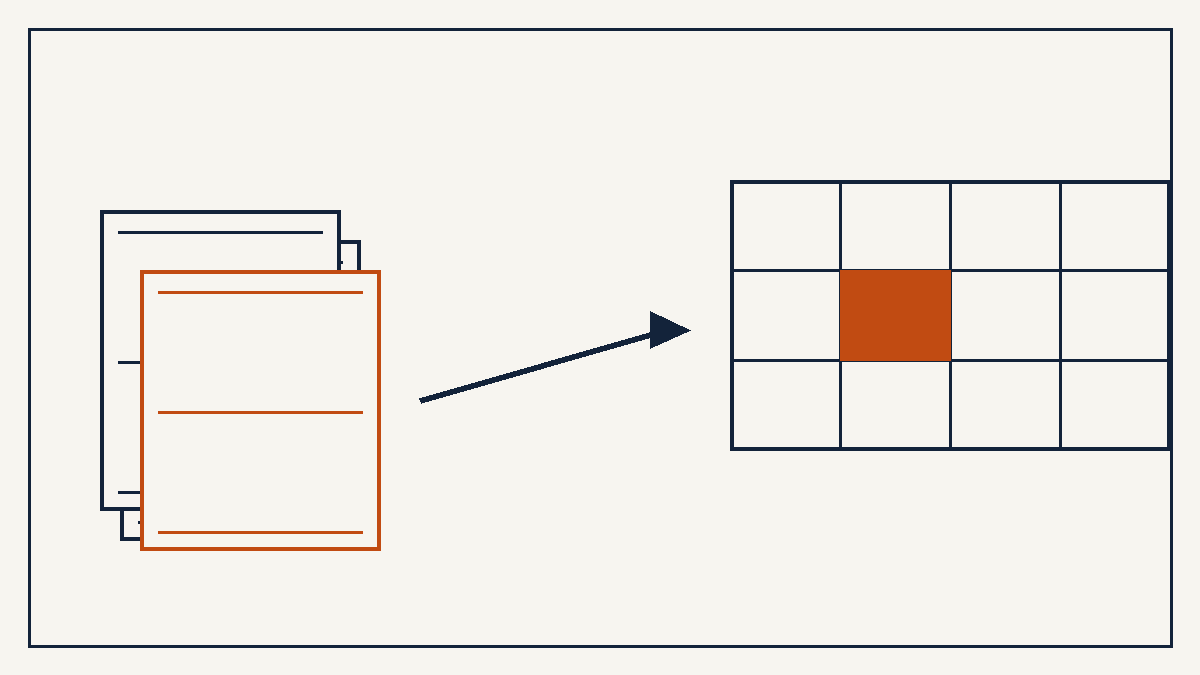
Tier one: document recognition — mature and already inside 1C
This is the cheapest, most measurable win. The “1C: Recognition of primary documents” service (1C:RPD) is built into standard configurations — 1C:Accounting 8 (from 3.0.106.60), Trade Management 11, Comprehensive Automation 2.5, and more than 25 industry solutions. For most companies the tool is already sitting inside the accounting system; the only question is whether anyone turned it on.
Numbers from 1C partner practice:
- one invoice typed by hand: 5–10 minutes; through 1C:RPD: about 30 seconds;
- a batch of 20 documents: 2–3 hours manually versus 15–20 minutes with recognition;
- an accounting team handling 30–40 documents a day saves roughly 21 hours a week — almost three working days.
Modern Russian recognition systems hit 98–99.5% accuracy on invoices and delivery notes. They handle blurry phone photos, poor scans and multi-page documents. The free quota — 250 pages a year on standard 1C tariff plans — is enough to process 25–30 real invoices and calculate the economics on your own numbers, not on a vendor slide.
Tier two: from scan to accounting decision
Reading the fields is half the job. The second tier is suggesting the accounting decision: the posting, the expense line, the counterparty. Here the work shifts from classic OCR to models trained on the company’s own transaction history.
What these systems do today, based on industry reviews and what I see at clients:
- Posting suggestions based on similar historical operations — the system looks at how the company booked comparable documents and proposes a ready-made entry.
- Automatic classification of bank transactions by expense line — statement reconciliation turns from a multi-hour task into an automatic operation with a discrepancy report.
- Anomaly detection — unusual amounts, duplicates, suspicious counterparties; the system flags them before the period closes, not at the audit.
- Draft responses to tax authority requests — essentially a RAG pipeline over the company’s document flow.
According to estimates from the Financial University under the Government of the Russian Federation, AI removes 30–40% of primary accounting operations, speeds up document processing 2–3×, and automatically catches 50–60% of technical errors. These are estimates, not promises — but the order of magnitude matches what I see in real deployments.
One more thing worth noting: since 2026, Russia has retired the old XML formats for invoices and delivery notes in favour of machine-readable documents. For AI this means the share of “bad scans” in the document flow will shrink and the quality of automation will keep improving. Tier two only gets cheaper.
152-FZ: the line runs between perimeters, not between “yes” and “no”
Let me be blunt: accounting is one of the most sensitive areas for 152-FZ (Russia’s personal data law). Personal data sits in typed fields across 1C: names and passports of employees in HR, individual counterparties and accountable persons in Accounting, individual customers in Trade Management and CRM. Exporting a document from 1C is a ready-made set of identifiers, and sending it to a foreign service formally counts as cross-border transfer under Article 12.
The practical framework I give teams:
- YandexGPT and GigaChat are hosted in Russia — you can work with personal data on them with the subject’s consent and basic paperwork (a processing policy, a designated responsible officer).
- Foreign models — only with de-identified data. But here’s the catch: replacing “Ivanov I.I.” with “Employee A” reduces risk, yet it is not legal de-identification under Article 3. Since 1 September 2025, a new de-identification procedure is in force — Government Decree No. 1154 and Roskomnadzor Order No. 140. Masking is risk reduction, not an indulgence.
- The right answer is usually one of five: de-identify before sending, run the model on-premise, use a Russian cloud, obtain consent, or sign a data processing agreement.
The good news: architecturally this is no longer a problem. Ready-made YandexGPT ↔ 1C:Accounting connectors exist on iPaaS platforms, and the combination “1C + Russian LLM + a de-identification gateway” takes weeks to assemble, not quarters.
Where to start: three quick wins
Don’t build an “AI strategy for accounting” — close three pain points. Order matters, so I’m numbering them:
- Turn on document recognition in your current 1C. It’s often already paid for by your ITS subscription. One day of setup, and the savings are hours per week for every accountant handling primary documents.
- Add an AI assistant for draft reports and responses to tax authority requests — on a Russian model, inside your perimeter. Start with the simplified tax system and 6-NDFL, where the formalisation is highest.
- Formalise a ban on uploading primary documents to foreign services — as policy plus a technical de-identification gateway. This costs less than one leak and one investigation.
If after step three you want to scale, an external AI adoption audit is worth it: a fresh look at the architecture and the economics before you build anything large.
In short
AI in accounting won’t replace the chief accountant — it removes a third of the routine so they have time for what they’re actually legally responsible for.
That’s the maturity test for any deployment: not “we have a neural network” but “the chief accountant closes the period without sleeping in the office”. Everything else is marketing.